Further Trainings (EMR/ASCA)
EMR/ASCA compliant training courses for body therapists and other interested people
At Kientalerhof we understand further education as the path to embodiment. As humans, we are present in our body experience. But we also learn and develop our ability to cope in the world, to perceive it appropriately and to realise values as embodied beings. We are not simply observing life, but are embedded in its wholeness. This experience of being embedded in life is called embodiment.
At Kientalerhof, the idea of the embodiment has always formed the core of our offer. Our educations and further trainings in bodywork as well as our offer of shorter courses and seminars are gathered around this core. Our endeavour: We get together in a place of learning where life happens, with joy and seriousness. Like this we can share our perceptions, values and experiences.
But embodiment means more than that. Whatever we are, whatever we do – the real value of all this is that we can embody it as a whole person. Only when all of this is embodied in us it can develop real power. In the end, this is more than competence, it is embodied human maturity.
Downloads und Links
Further Trainings by Method
New courses are continually being added to the advanced training program at Kientalerhof, which focus, supplement and expand the competencies of therapists. By clicking on one of the tiles you can directly access the various advanced training courses tailored for different methods.








Further Trainings by Topic
In order to make it easier for you to find what you are looking for, we did not only group our training courses by method (see above), but also by thematic focus. If you prefer to select your training by topic rather than method, the following tiles will take you to an overview per topic.




Overview of cross-method training courses (EMR/ASCA)
In the following calendar you will find an overview of all further training courses at the Kientalerhof, which are EMR/ASCA compliant and can be attended independently of your own therapy method. Note: If you are interested in a second body therapy method in addition to your current method and would like to integrate it into your practice, you can also attend the first level of each training course as EMR/ASCA compliant advanced training.

3 Days


with Susanne STRAUB
and
Kalyan LENSCH
5 Days





with Franziska WEBER
and
Raymond VOGEL
3 Days
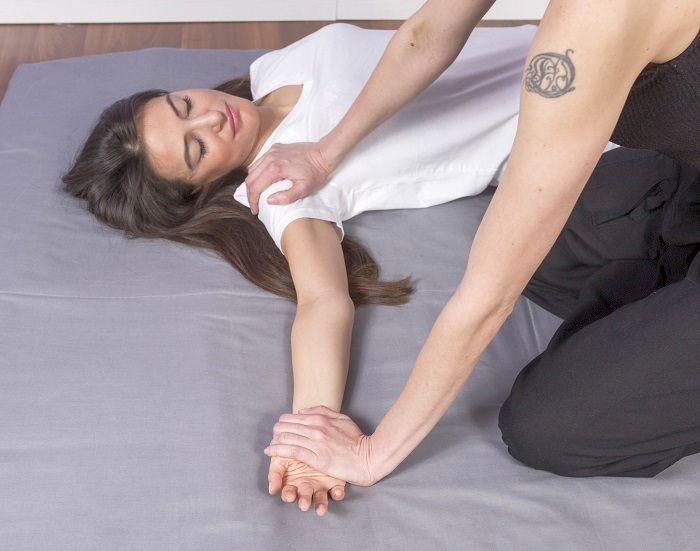
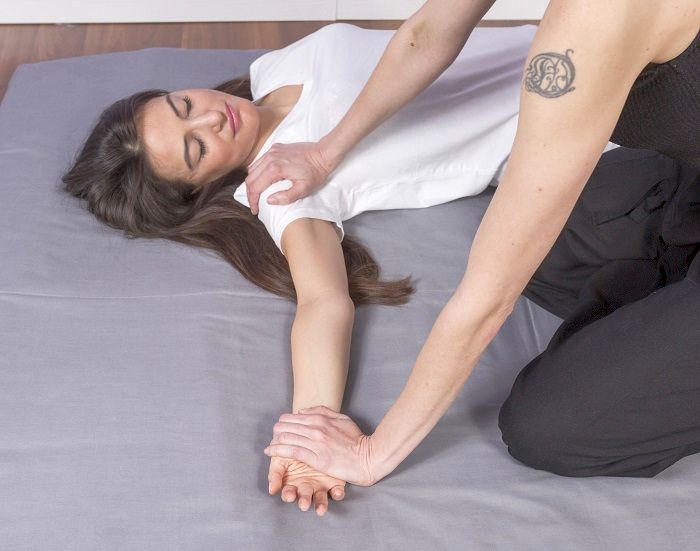
Shiatsu for Back Pain – Part 2 It’s not uncommon for people to come to our practice with pain I their upper back, specifically between the shoulder blades. This might manifest as pressure, a pulling sensation, or even significant pain during movement or at rest, pain that is persistent and difficult to alleviate. Such complaints can be an expression of a current, but especially a long-term, difficult emotional situation that puts a strain on the heart, or of other types of stress. They can also indicate an imbalance in the body’s posture, which often develops as a consequence of such emotional patterns, or for example, in cases of scoliosis or after accidents. Course Content On this day, we will work with the upper back and In between the shoulder blades in a variety of ways. We will take the time to hold this area with our hands and gain an understanding of its characteristics. This will help us to apply Local Shiatsu and specifically address areas of concern (such as the costovertebral joints). We will work both physically and with mindfulness in the energetic space. We will work deeply on the body while also being mindful of the energetic space. We will locate, as it were, “electrically charged” spinous processes of the thoracic spine and release them using internal techniques. An important element can also be the unwinding of the local fascia, which allows us to reach this area in its depth. The entire rib cage and shoulders will be addressed. The significance of the arms and hands, the neck, and the diaphragm for this area will become apparent. Finally, we will relate the area between the scapulae, where we have been working, to important resonance areas such as the wrists and hands, a kyo in the lower warmer, the hips, or the feet. A meridian-free approach is helpful here; however, meridian work can also become important. The active participation of our clients will be crucial, and we will discuss exercises and homework that they can use to stabilize their backs in the long term. By participating in this course, you will learn how important life circumstances are for the development and maintenance of pain between the shoulder blades how to work directly with the energetic patterns of the places of discomfort using Local Shiatsu and observe the resulting changes. how to influence local pain by working with resonance areas. how to motivate clients to actively work towards a lasting improvement in their situation by giving them homework and tips. Target group Shiatsu practitioners and advanced students Prerequisites at least one-third of a 3-year Shiatsu training course Note 6 hours of training/continuing education (EMR/ASCA compliant) See also the articles Shiatsu for Pain in the Lower Back Shiatsu with the Heart Energy Herzens Local Shiatsu
Kiental
with Wilfried RAPPENECKER
1 Day
3 Days