



A workshop on touch, perception, adaptation, and resonance—open to anyone who works with touch (e.g., Shiatsu practitioners, Trager therapists, craniosacral therapists, etc.)
When we touch another person, are we really touching only them?
Touch is often understood as something we do: we apply pressure, move tissue, use a technique, stimulate a structure. But the moment contact is made, something more complex begins to happen. The recipient reacts to our touch, and this reaction inevitably influences our perception and, consequently, the way we touch.
There is therefore no such thing as a truly neutral touch.
Every touch is part of a relationship between two living systems. What we perceive depends not only on the person we are touching, but also on how we approach them, on our own state of presence, on our expectations, and on the quality of our listening.
This raises a fascinating question that is also consistent with one of the profound epistemological insights of modern physics: can we observe a phenomenon without becoming part of it?
Without attempting to directly apply quantum physics to the field of bodywork, this question offers a powerful starting point for exploring touch. The observer and the observed cannot always be viewed as completely independent of one another. Similarly, in touch-based work, the person doing the touching is not outside the phenomenon: their presence is part of what unfolds.
The workshop explores this relational dimension of touch through practical exercises.
From Technique to Relationship
We will examine how the same technical gesture can evoke very different experiences depending on the person receiving it—and how our own touch changes spontaneously in response.
Pressure, weight, rhythm, speed, direction, continuity, depth, and the quality of contact can all be modulated according to our perception.
The goal is not to learn yet another set of techniques, but to develop the ability to adapt our touch to the person who is actually present.
This requires a refinement of perception.
What do we actually perceive with our hands? And what happens when we allow ourselves to perceive beyond our hands—through movement, breathing, hearing, seeing, proprioception, and our own inner sensations?
Perception becomes multisensory, and touch becomes an act of listening.
The Recipient as a Partner in the Process
A central focus of the workshop will be the continuous feedback loop between perception and action:
Perception ? Touch ? Reaction ? New Perception ? New Touch
The recipient is therefore not a passive recipient of a technique. Their reaction becomes information, and this information enables the practitioner to adapt the next touch.
In this sense, touch becomes a dialogue.
We will explore the difference between imposing a predetermined action and allowing a touch that responds to what is happening in the moment. We will experiment with both approaches and make the contrast tangible and immediate.
Uketoru – Connecting Before Acting
An important element of the workshop will be the Japanese concept of Uketoru
— connecting, accepting, receiving.
Before we ask what we can do with the other person, we can ask a more fundamental question:
Can we truly welcome the other?
The quality of our touch depends largely on the quality of our ability to establish a connection.
This opens up a different perspective on touch: Instead of trying to
change the recipient, we first make ourselves ready to perceive what is already happening. From this place, a response can arise naturally and precisely.
From Sensing to Resonating
The workshop will proceed step by step:
from acting to sensing,
from sensing to reacting,
from reacting to resonating.
Here, resonance is not merely a metaphor for harmony. It describes the possibility that, through refined perception and empathetic touch, two people can choose the topics for their multisensory dialogue themselves.
In this way, we enter into a more coherent relationship.
The practitioner does not disappear, nor does the technique lose ist significance. On the contrary: the technique becomes more subtle, flexible, and intelligent—it serves perception rather than replacing it.
Ultimately, the question is:
Who is actually touching whom here?
Perhaps the most profound change in touch begins when we realize that contact is never one-way. As we touch, we are also influenced by
what we touch. We influence and are influenced; we perceive and are perceived. The art of nuanced touch lies precisely here:
knowing what to do,
knowing when to change it, and above all
knowing when to listen.
The workshop is open to both Shiatsu practitioners and practitioners of other disciplines that involve touch. Through a combination of brief theoretical discussions, sensory experiments, and practical exercises in pairs, participants are invited to discover their own capacity for perception, adaptation, and relationship-oriented touch.
Prerequisites
Suitable for all body therapists.Course Language
The course is conducted in English with German translation.Course Times
Fri: 10 a.m. – 12:30 p.m. / 2:30 p.m. – 6:30 p.m.Sat: 9:00 a.m. – 12:30 p.m. / 2:30 p.m. – 6:30 p.m.
Sun: 9:00 a.m. – 12:30 p.m. / 2:30 p.m. – 4:00 p.m.
Note
20 hours of continuing education, EMR/ASCA compliant.Course instructor
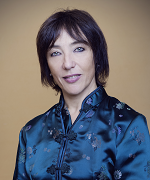
Patrizia STEFANINI
graduated with honors in Physics (1982) and specialized in Medical Physics (1985). Simultaneously, she began studying Yoga, Aikido and Shiatsu. She first completed a Shiatsu training course in Italy, then she has chosen to continue her studies first with Wataru Ohashi and later, for almost two decades, with Pauline Sasaki. In more recent years, she has used her skills from her studies in Physics, researching theories and experimental data to support the model of man that underlies Shiatsu and, more generally, Oriental Medicine. She has co-authored three fundamental texts on Shiatsu and Oriental medicine, and dozens of articles on the same subjects, seen through the lens of modern Western science. Original aspects of her Shiatsu approach concern the reading of man in terms of a quantum macro system.
Course fees

CHF 590 (excluding accommodation, meals and tourist tax)
CHF 530 (Excluding accommodation, meals, and tourist tax). The early bird rate is only applicable with a 20% deposit paid 14 days after registration and the remaining balance paid no later than 60 days before the seminar begins. Please refer to sections 8, 20, and 21 of the Terms and Conditions.
| Prices per person for full board and lodging for 2 nights | CHF |
|---|---|
| ChieneHuus: | |
| Single occupancy of 2-bed-room clay or wood100 with shower/toilet | 500.00 |
| 2-bed-room clay or wood100 with shower/toilet | 380.00 |
| Kientalerhof: | |
| Single occupancy of 2-bed-room with shower/toilet | 400.00 |
| 1-bed-room with shower/toilet | 380.00 |
| Single occupancy of 2-bed-room, shower/toilet on floor | 360.00 |
| 2-bed-room with shower/toilet | 310.00 |
| 2-bed-room, shower/toilet on floor | 290.00 |
| 3-bed-room with shower/toilet | 290.00 |
| 3-bed-room, shower/toilet on floor | 250.00 |
| 4-bed-room, shower/toilet on floor | 230.00 |
Personal consultation

Renata Pfeiler
Main number: +41 33 676 26 76 | E-Mail: renata.pfeiler@kientalerhof.ch