


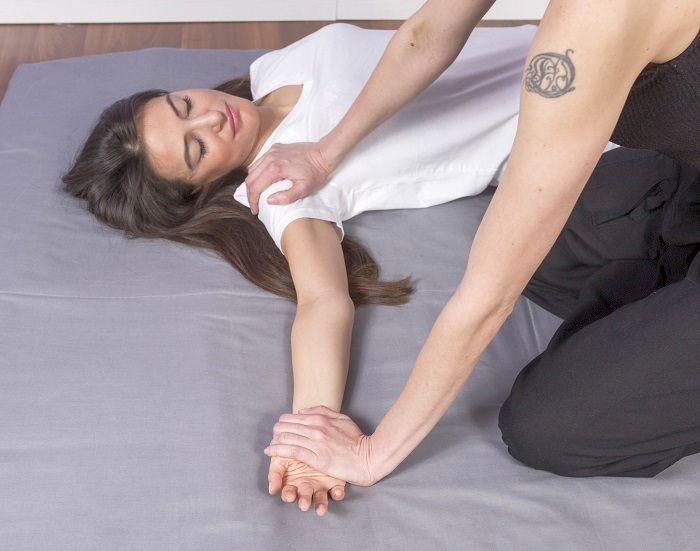
The body organises its internal space autonomously and intelligently. Four areas are of particular importance in this regard: the transition from the neck to the head, the shoulder girdle, the Middle Burner with the diaphragm, and the pelvic structure, including the pelvic floor. These four areas are also referred to as diaphragms (derived from the anatomical diaphragm). They form part of a complex regulatory system that maintains the body and the individual in a state of fluid equilibrium and stabilises them in times of crisis.
Already in early childhood, we learn to align our bodies so that we can cope well with the diverse demands of life. In doing so, we follow influences from our family of origin, our personality, genetic factors, formative life experiences, and much more. Often, patterns already develop at this age that shape our ability to cope with different life situations for the rest of our lives.
In the interplay of these patterns, the four diaphragms are particularly important for the stability of the energetic and physical body space. On the one hand, they provide support and security. However, chronic patterns or blockages in the diaphragms can also pose serious obstacles to personal development and the resolution of physical or emotional problems.
In Shiatsu practice, such chronic patterns often manifest themselves in the area of the upper diaphragm around the shoulders and neck, for example, as individual tension patterns in the shoulders, in the cervical spine, especially in the first and second cervical vertebrae, or in the area of the first to third ribs in the upper chest. Among other things, they control our emotional experience in the face of external and internal stress.
The middle diaphragm encompasses not only the diaphragm but also the lower chest, including the costal arches and the upper hara. Among other things, it regulates the energetic connection between the upper and lower burning space. Particularly in cases of chronic, intense emotional stress, we often find great tension in the home of wood element, or a neediness, sometimes even isolation, in earth element. Working sensitively with such patterns can open up new possibilities for our clients to deal with difficult situations.
In the lower diaphragm, density is often noticeable deep in the hip, in the area of the sacroiliac joint, or in the groin around the iliopsoas muscle. When such blockages open up during treatment, important resonance space is gained from the torso into the legs (or vice versa), which can, for example, resolve complaints in the hip but also higher up in the shoulders.
The four diaphragms, in their respective states, are closely interwoven with the entire energetic regulatory pattern of the body space. They never act autonomously or independently of the other three diaphragms or other structures. For example, if you're working with a painful shoulder blockage, you'll always look at how the affected shoulder is connected to the entire body, or whether corresponding blockages in the middle or lower diaphragm can be released. The freer the resonance space throughout the body becomes, the greater the likelihood that the painful area will find a new and less painful pattern.
In this seminar, we'll understand Shiatsu as working with the entire body's space. To do this, we'll examine the spaces of the four diaphragms and determine which blockage patterns can be best reached with which techniques. The relationship between the diaphragms, as well as to other typical resonance areas, will be closely examined and utilized for treatment.
By attending this seminar, you will:
- • Gain a new understanding of the physical and energetic body space
• Learn about and practice perceiving the energetic body space
• Understand the significance of the four diaphragms and use them for treatment
• Learn and deepen examination techniques for these body areas
• Use local shiatsu on the diaphragms (and other body areas)
• Practice focused presence in the energetic space
• Learn new shiatsu techniques and specific kyo and jitsu techniques
Prerequisites
At least one-third of a 3-year shiatsu training courseNote
26 hours of training and continuing education, EMR/ASCA-compliantFor further information see the article "Traces of Ki - Introduction to a Meridian-Free Shiatsu"
on the website: "Tracing Ki"
Course instructor
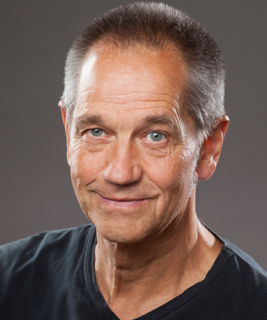
Wilfried RAPPENECKER
GP, founder and for 30 years director of the School for Shiatsu Hamburg, Germany. For many years director of the International School of Shiatsu (ISS) Kiental, and the European Shiatsu Conferences Kiental, Switzerland. He is co-founder of the Shiatsu Society Germany (GSD) and author, co-author or editor of seven books on Shiatsu as well as numerous articles.
Course fees

CHF 780 (excluding accommodation, meals and tourist tax)
CHF 700 (Excluding accommodation, meals, and tourist tax). The early bird rate is only applicable with a 20% deposit paid 14 days after registration and the remaining balance paid no later than 60 days before the seminar begins. Please refer to sections 8, 20, and 21 of the Terms and Conditions.
| Prices per person for full board and lodging for 3 nights | CHF |
|---|---|
| ChieneHuus: | |
| Single occupancy of 2-bed-room clay or wood100 with shower/toilet | 738.00 |
| 2-bed-room clay or wood100 with shower/toilet | 558.00 |
| Kientalerhof: | |
| Single occupancy of 2-bed-room with shower/toilet | 588.00 |
| 1-bed-room with shower/toilet | 558.00 |
| Single occupancy of 2-bed-room, shower/toilet on floor | 528.00 |
| 2-bed-room with shower/toilet | 453.00 |
| 2-bed-room, shower/toilet on floor | 423.00 |
| 3-bed-room with shower/toilet | 423.00 |
| 3-bed-room, shower/toilet on floor | 363.00 |
| 4-bed-room, shower/toilet on floor | 333.00 |
Personal consultation

Renata Pfeiler
Main number: +41 33 676 26 76 | E-Mail: renata.pfeiler@kientalerhof.ch