


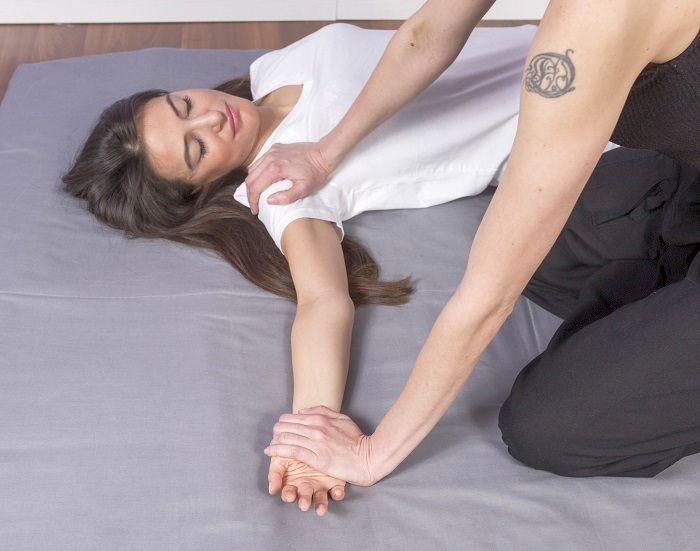
Shiatsu with backpain
Back pain is a common reason clients visit our practice. Shiatsu with the water element and its energetic organs/meridians, the bladder and kidneys, can be of great help here. However, we should also take a closer look at the location of the discomfort itself and specifically promote the integration of the affected section of the back into the entire body. The varying isolation of these areas from the rest of the body always causes local pain to arise and maintains it.
Course Content
Back pain most commonly occurs in the lower back; however, it can also occur in the upper back between the shoulder blades or in areas of great tension in the mid-back. Like all human problems, they always arise in a specific life context. Stress, painful experiences, emotional turmoil, or avoidance are important both as causes and in maintaining the discomfort. It is worthwhile to explore such causes through conversation and touch. If we succeed in developing a sense of this person's needs, our work will be much more helpful than if we simply proceed technically correctly.In addition to meridian work based on an energetic assessment, local Shiatsu with the specific location of the discomfort has proven very effective. To do this, we take the affected area in hand, explore what peculiarities are evident in the energetic pattern of this body space, work with it specifically and directly, and observe the resulting changes.
In addition, it is necessary to examine the integration of the pain area into the entire back as well as the entire body and to look for locations that appear to be particularly important for maintaining the discomfort. Such "resonance areas" can be found in the immediate vicinity or in the most distant part of the body.
In particular, we examine the interaction of the "three diaphragms" in the shoulder-neck area, the middle warmer, and the pelvic area, and look for clear kyo patterns, for example, in the hara or in the feet and ankles. Working with them will usually significantly influence the situation in the pain area.
Finally, the active participation of our clients is important, and we will discuss which exercises and homework we can give them to help them stabilize the situation in their back in the long term. The conversation, local shiatsu, and working with resonance areas will be discussed in detail in this short seminar.
By participating in this course, you will learn
- how important living conditions are for the development and maintenance of back pain.
- how to work directly with the energetic patterns of the symptoms using Local Shiatsu and observe the resulting changes.
- how to influence local symptoms by working with resonance areas
- how to encourage clients' motivation to take action themselves to achieve lasting improvement of their situation through homework and tips.
Target group
Shiatsu practitioners and advanced studentsPrerequisites
at least one-third of a 3-year Shiatsu training courseNote
6 hours of training/continuing education (EMR/ASCA compliant)See also the articles
Shiatsu for Back PainLocal Shiatsu
Course Instructor
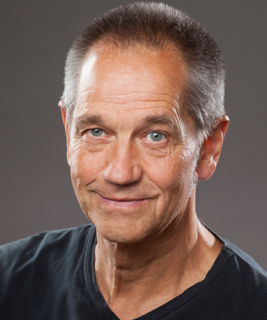
Wilfried RAPPENECKER
GP, founder and for 30 years director of the School for Shiatsu Hamburg, Germany. For many years director of the International School of Shiatsu (ISS) Kiental, and the European Shiatsu Conferences Kiental, Switzerland. He is co-founder of the Shiatsu Society Germany (GSD) and author, co-author or editor of seven books on Shiatsu as well as numerous articles.
Course costs

CHF 180 (excl. accommodation, meals and tourist tax)
CHF 160 (excl. accommodation, meals and tourist tax). The early bird price is only applicable for a down payment of 20% 14 days after registration and payment of the remaining costs up to 60 days before the seminar begins. Please note sections 8, 20 and 21 of the terms and conditions.
Personal advice

Renata Pfeiler
Main Number: +41 33 676 26 76 | E-Mail: renata.pfeiler@kientalerhof.ch